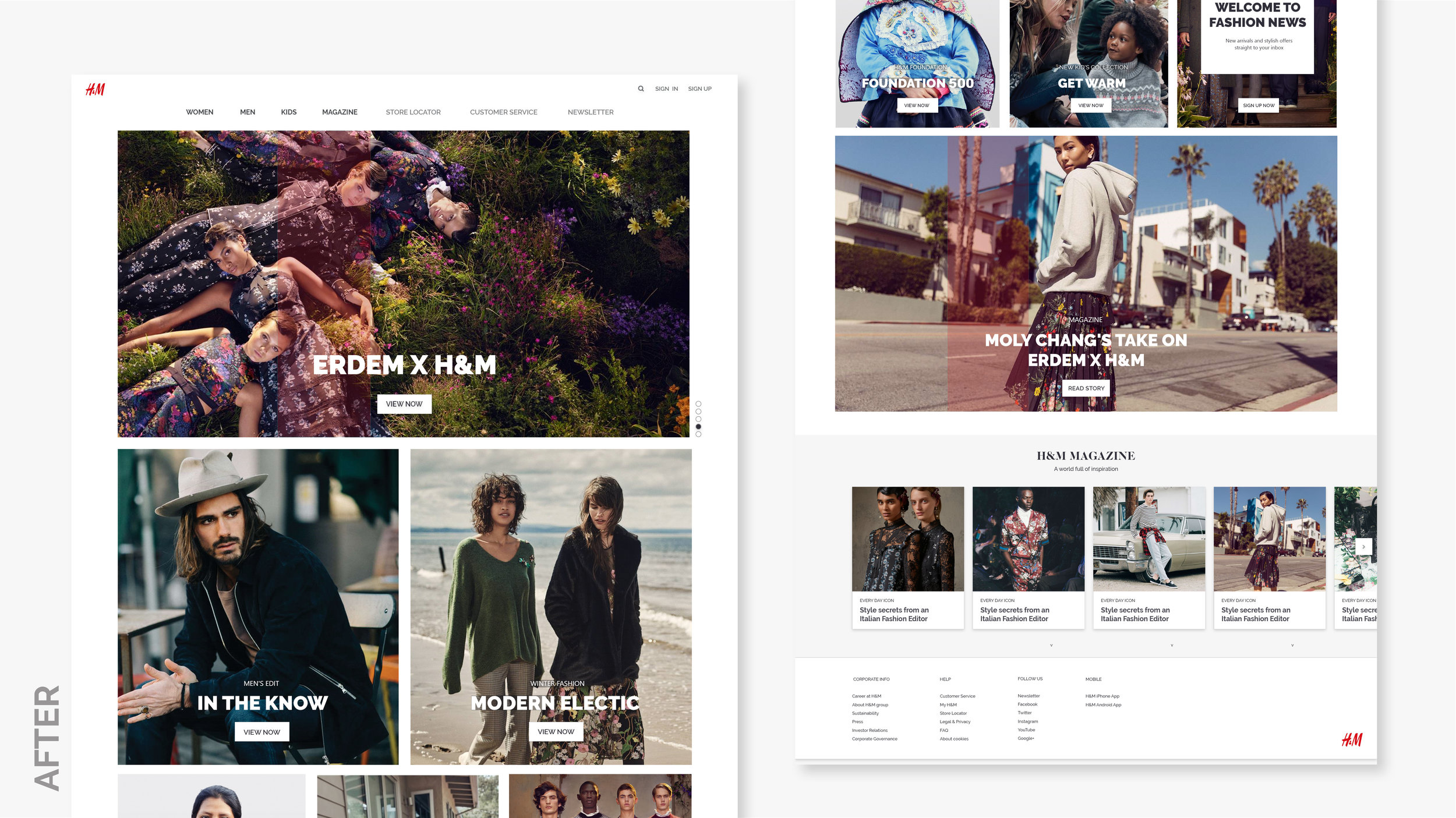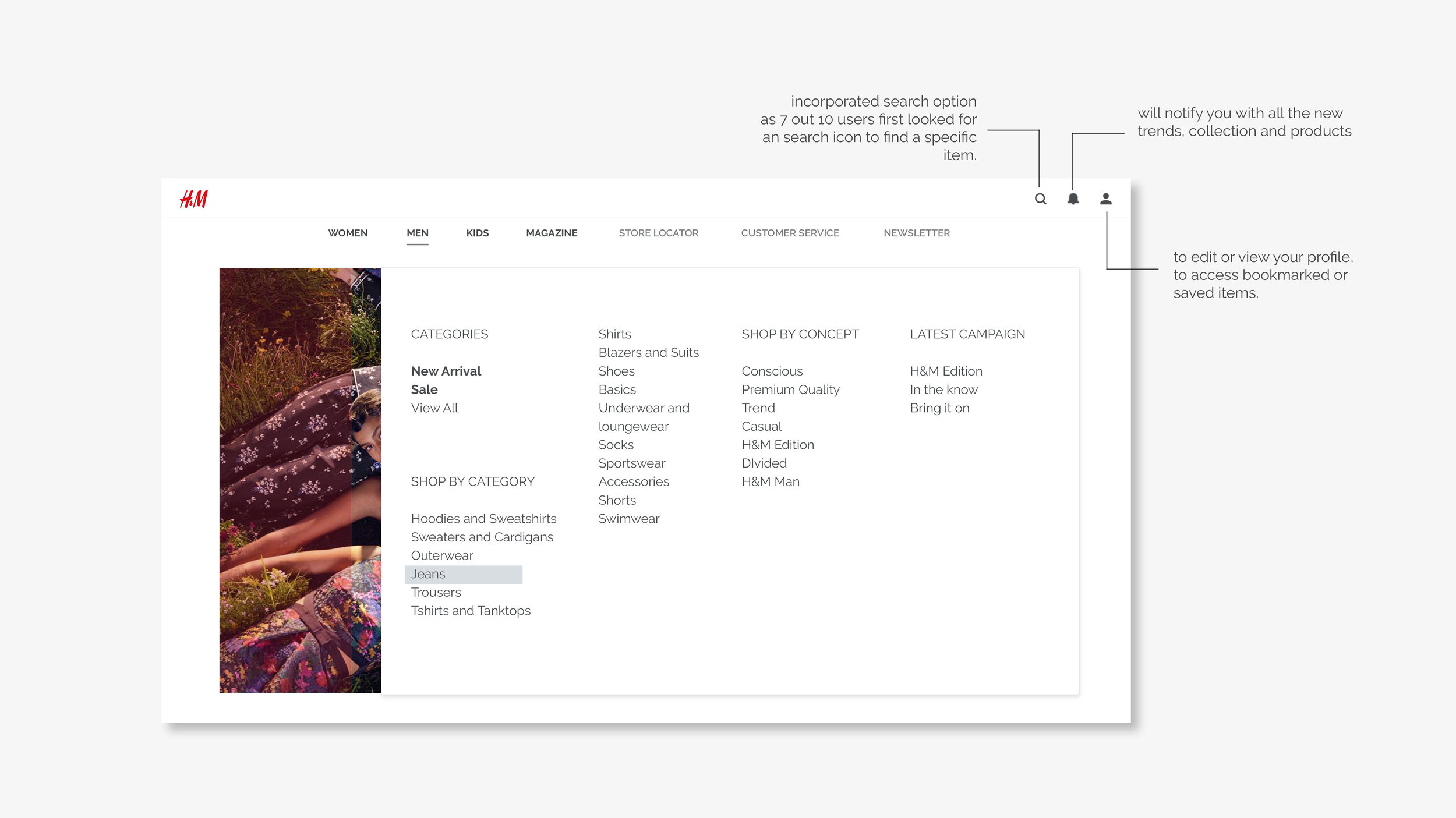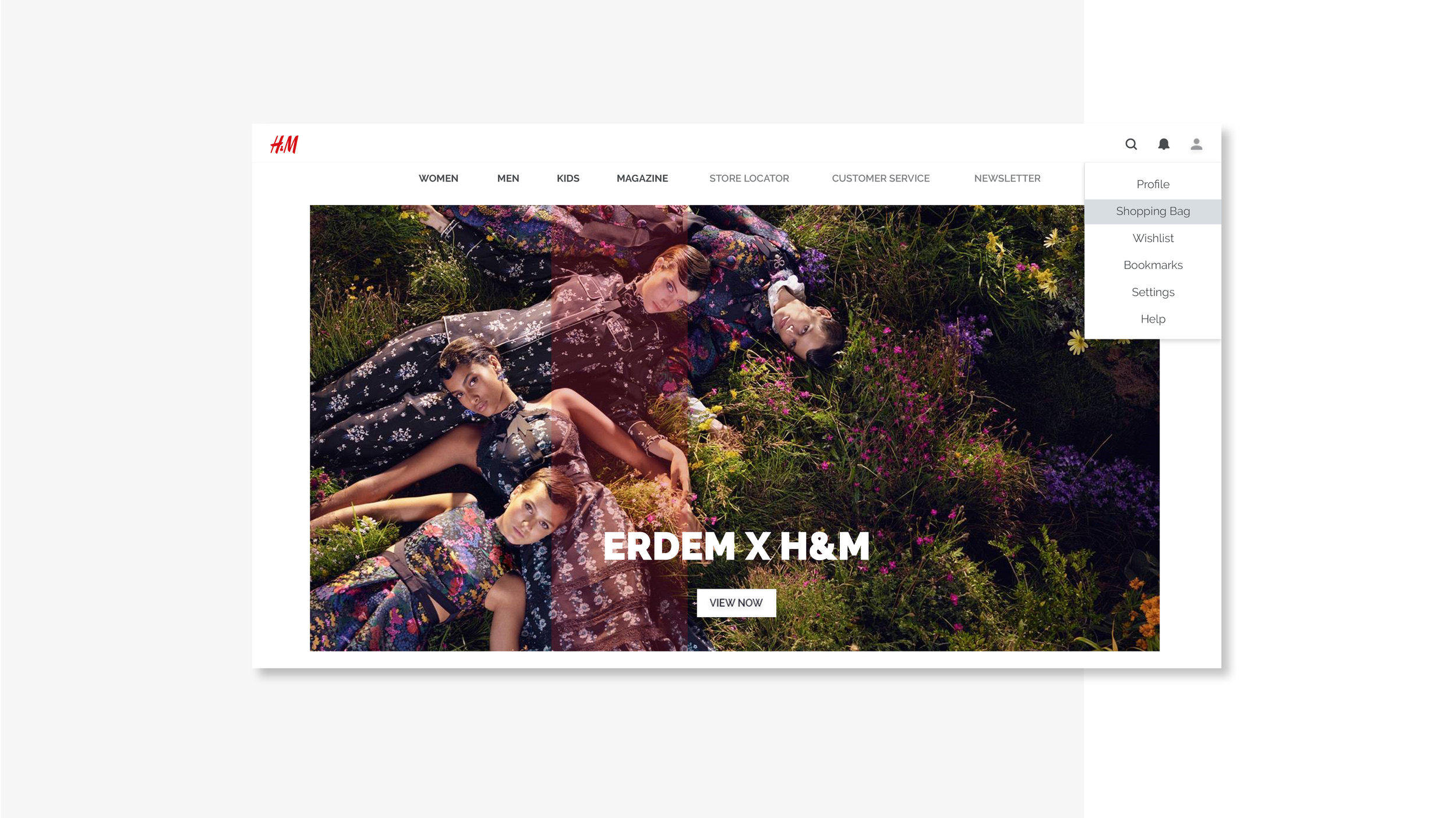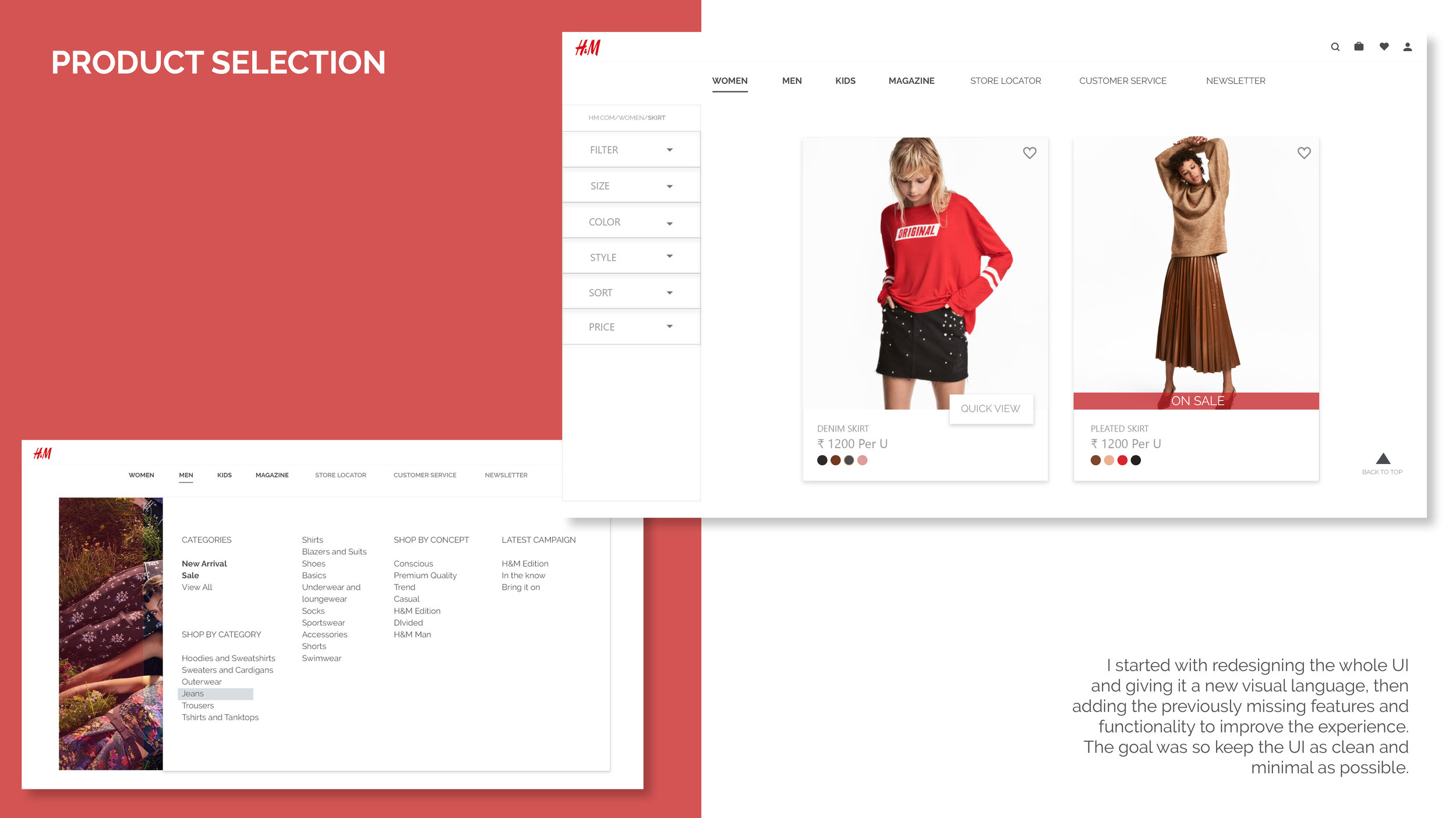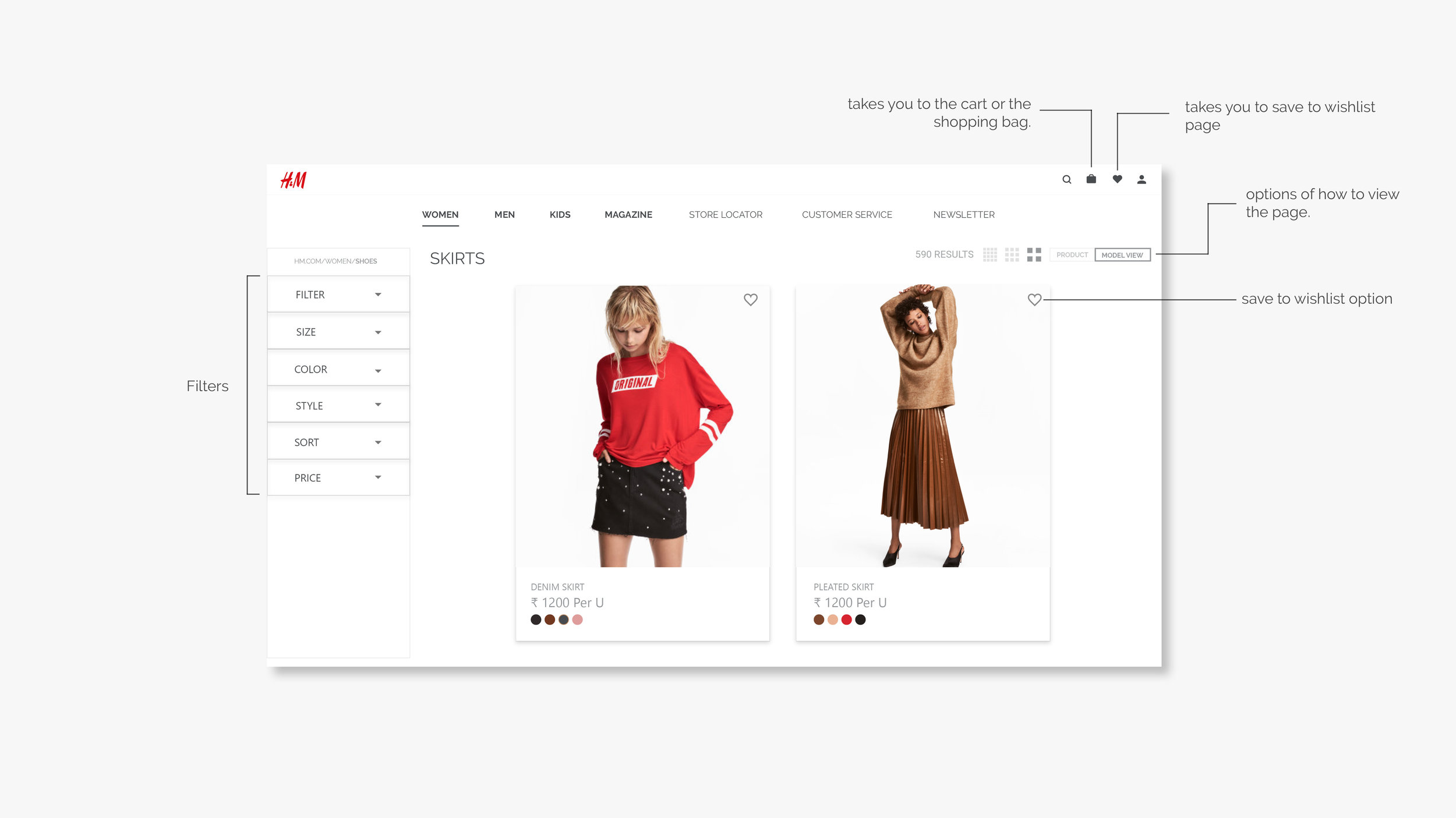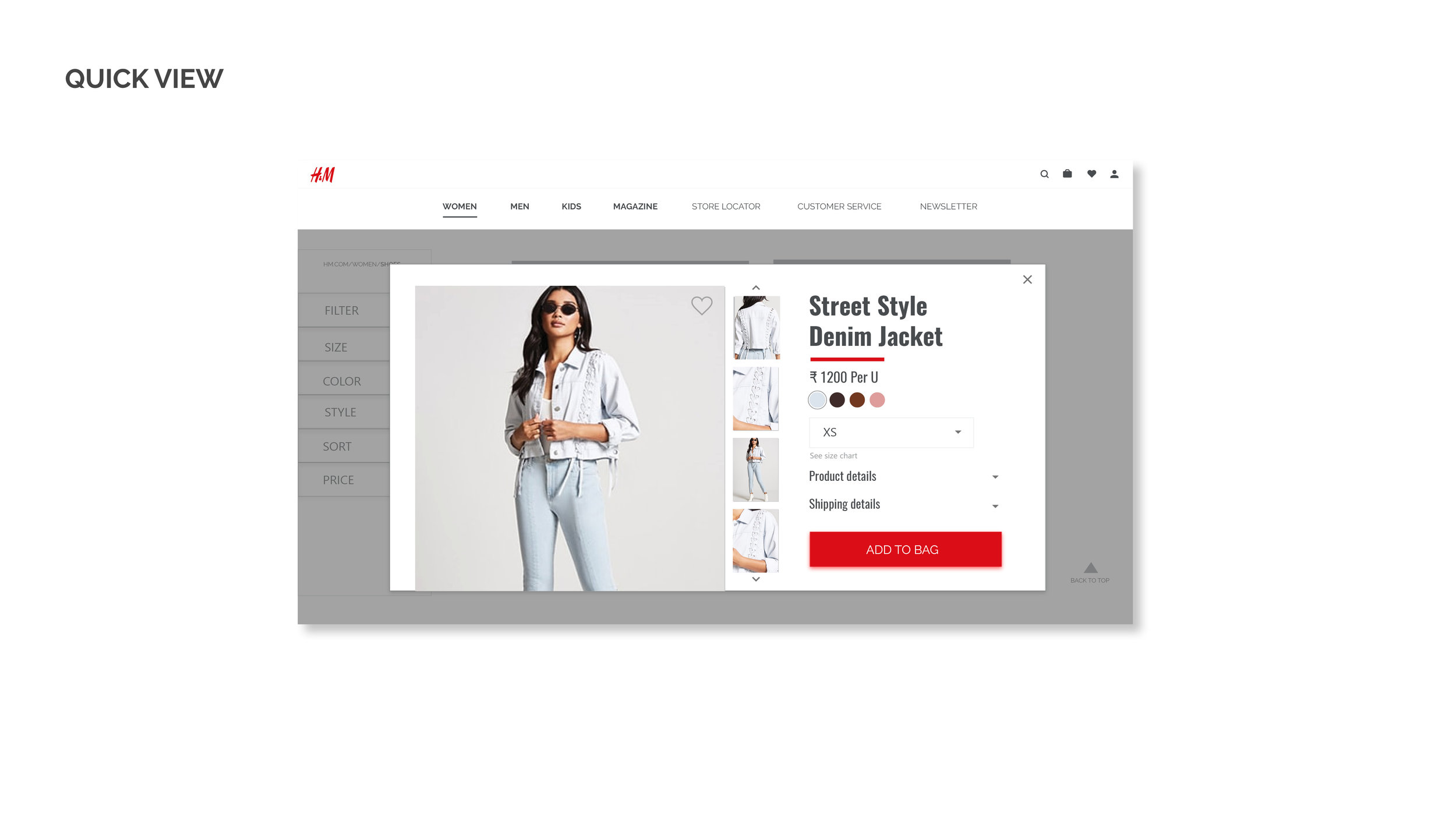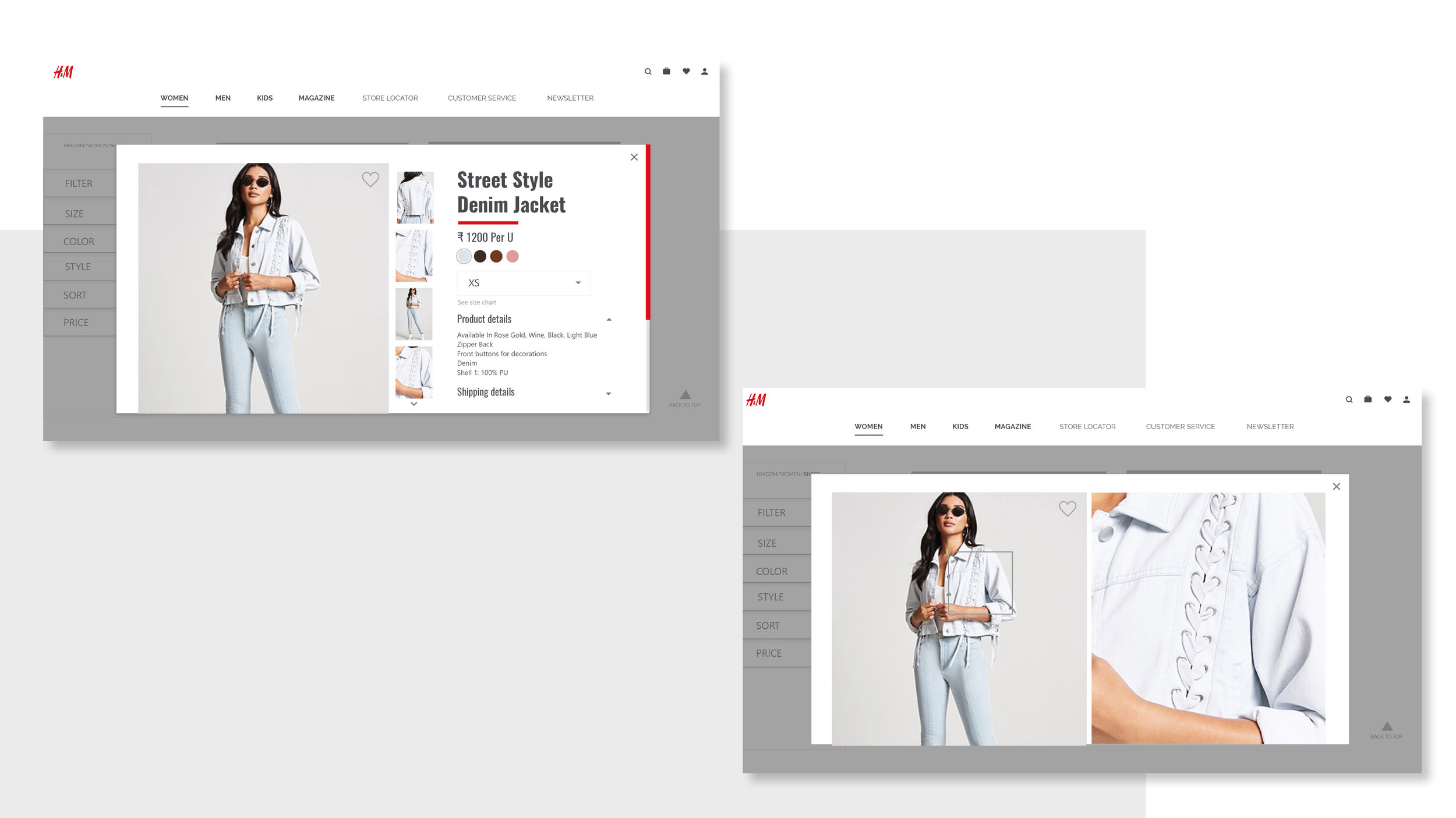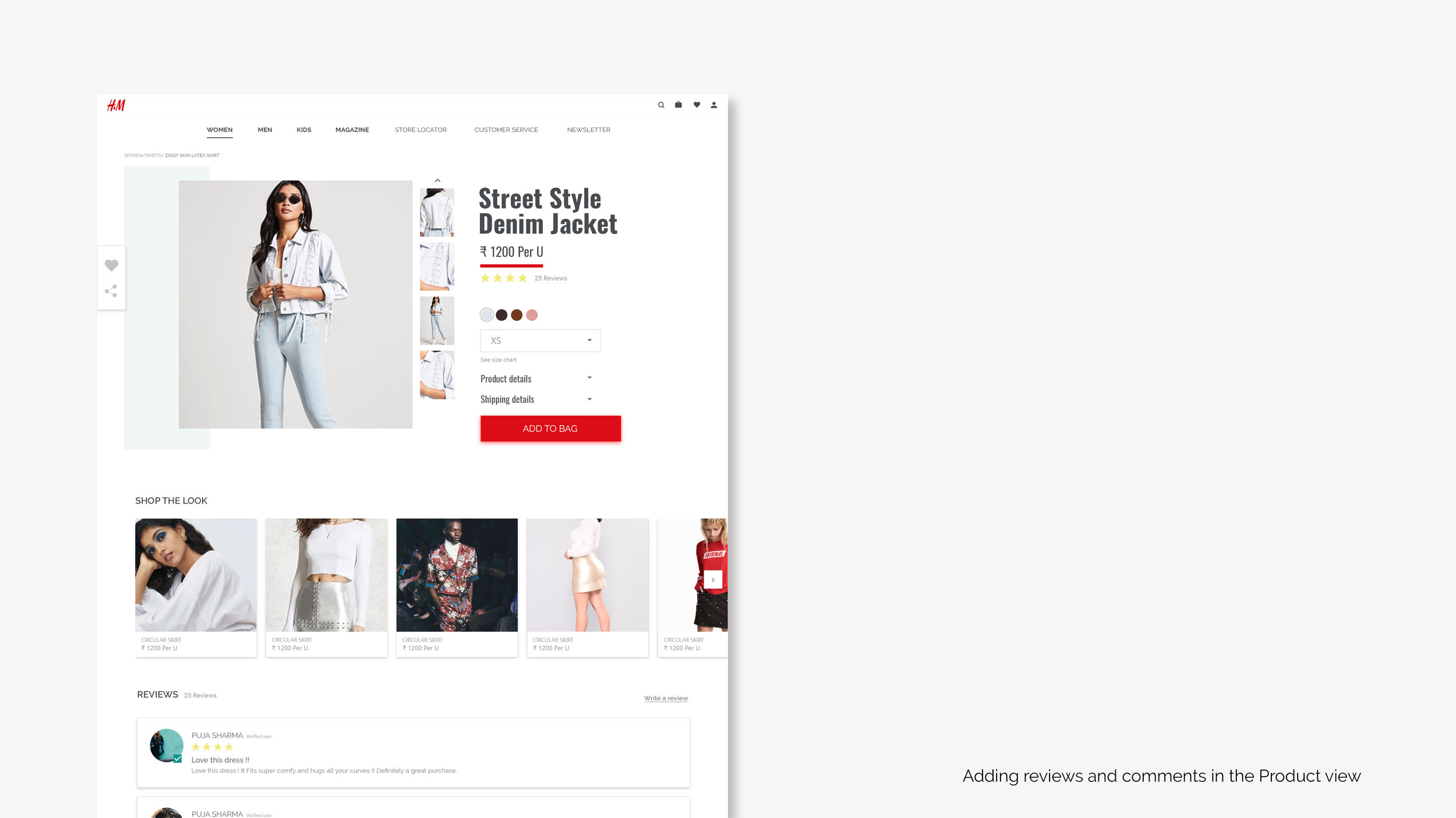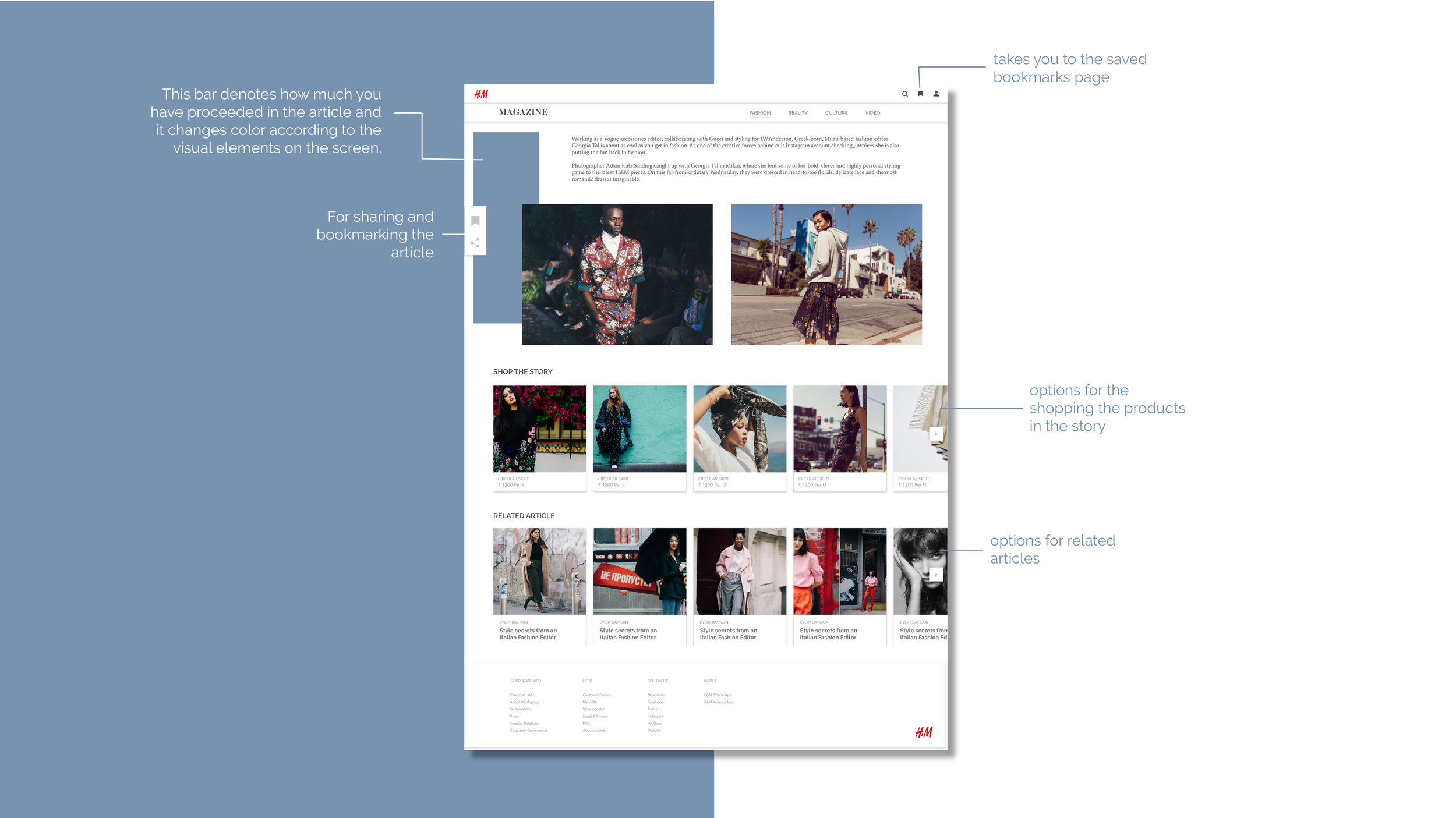

Redesigning the website by keeping the following things in mind:
I chose H&M because it is one of my favourite fashion brands. Although H&M is expanding its retail stores throughout India, it is still lacking in an online shopping experience.
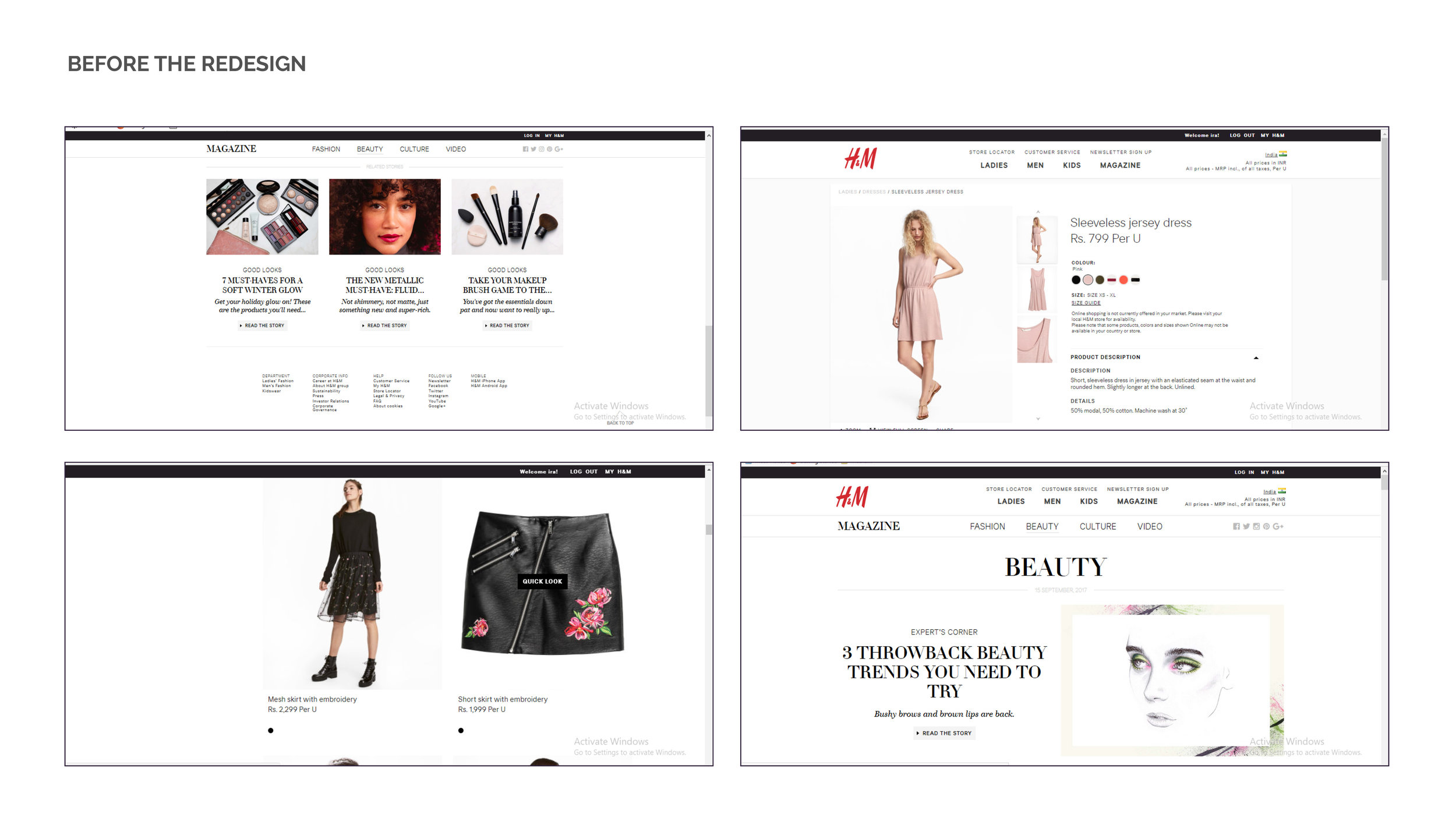
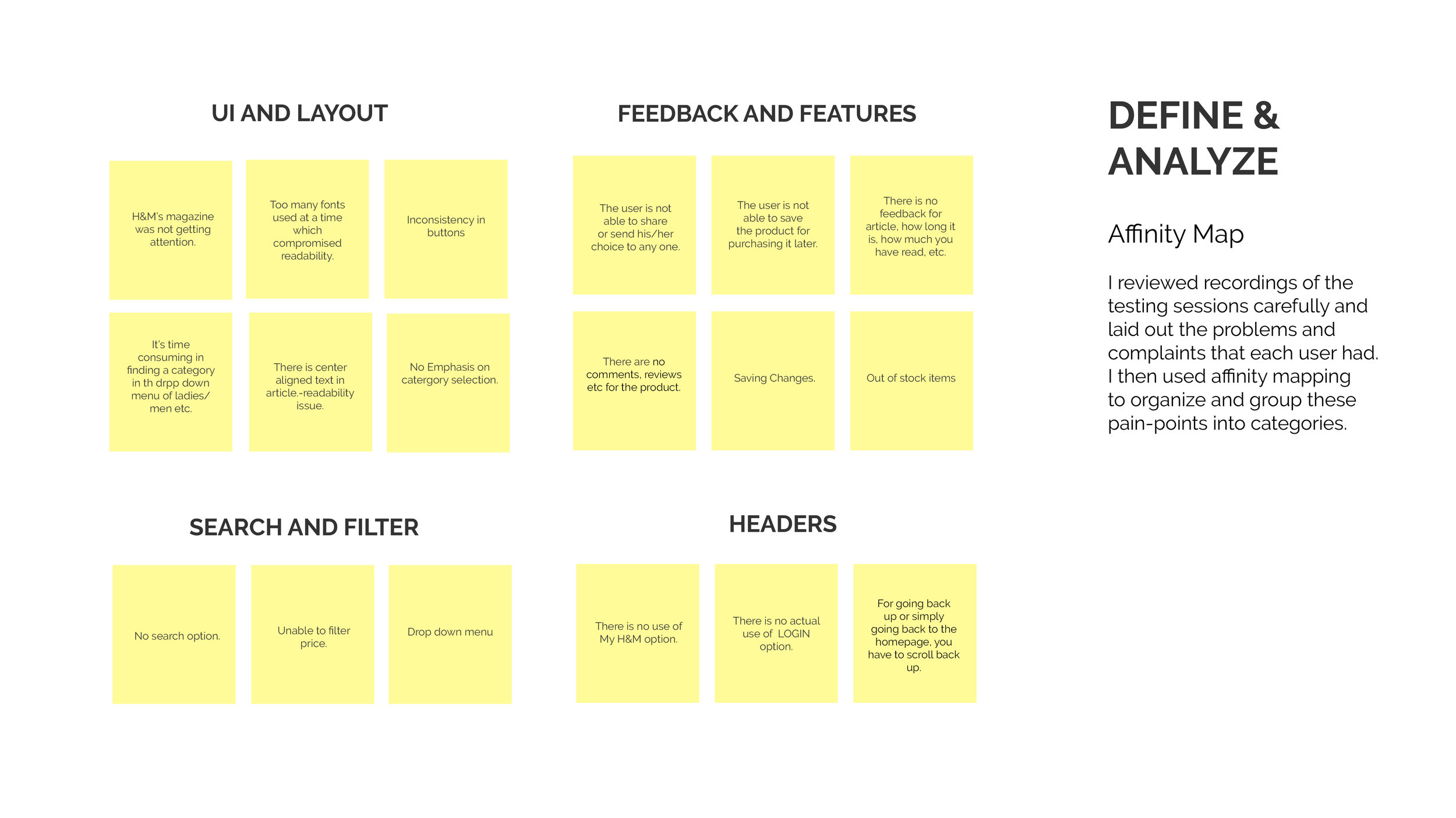
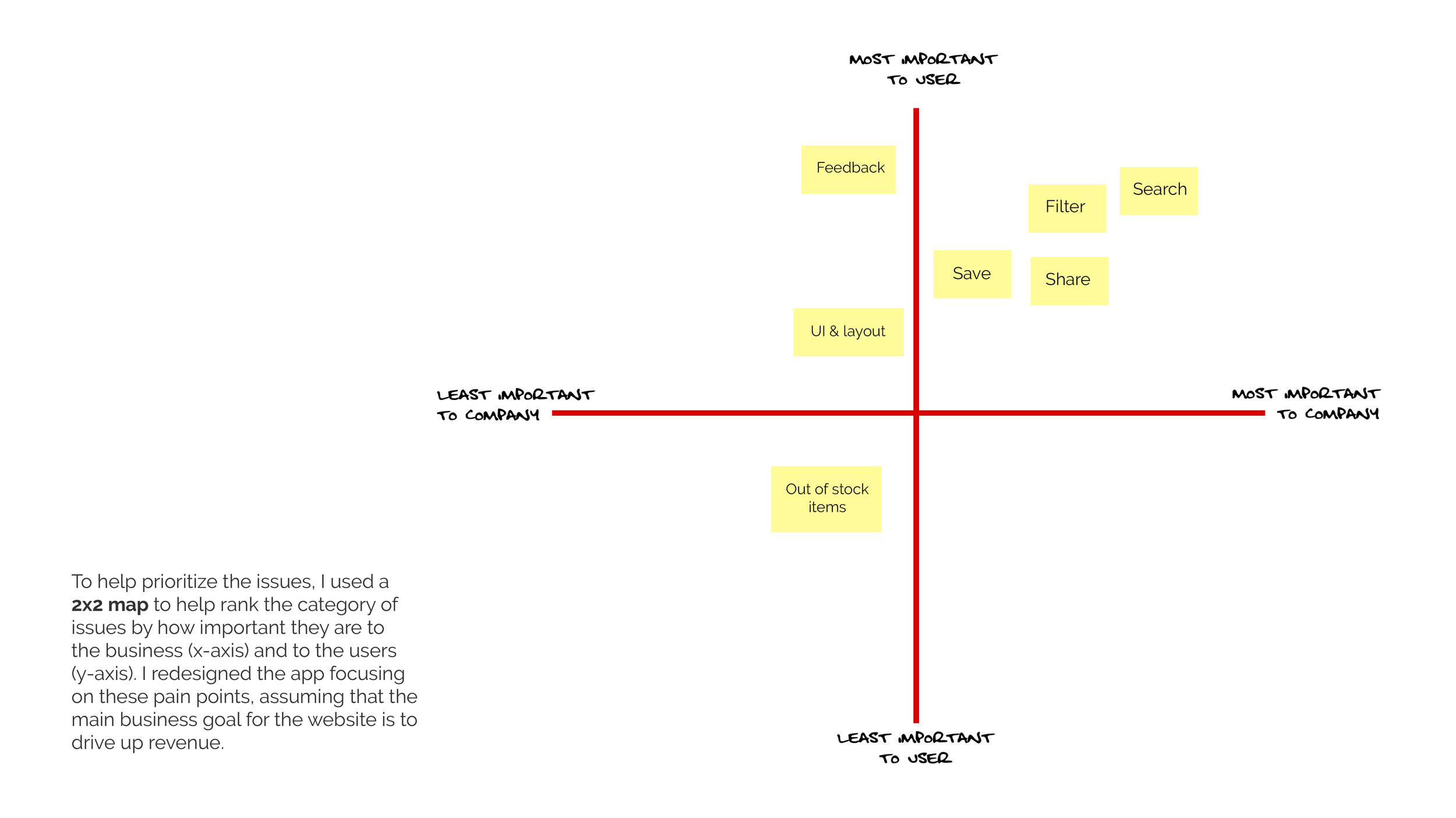
I faced multiple issues when I used the website. Though I am not affiliated with H&M, I wanted to figure out if other users were having similar problems.
It led me to conduct usability tests, discover several pain points and redesign a part of the experience.
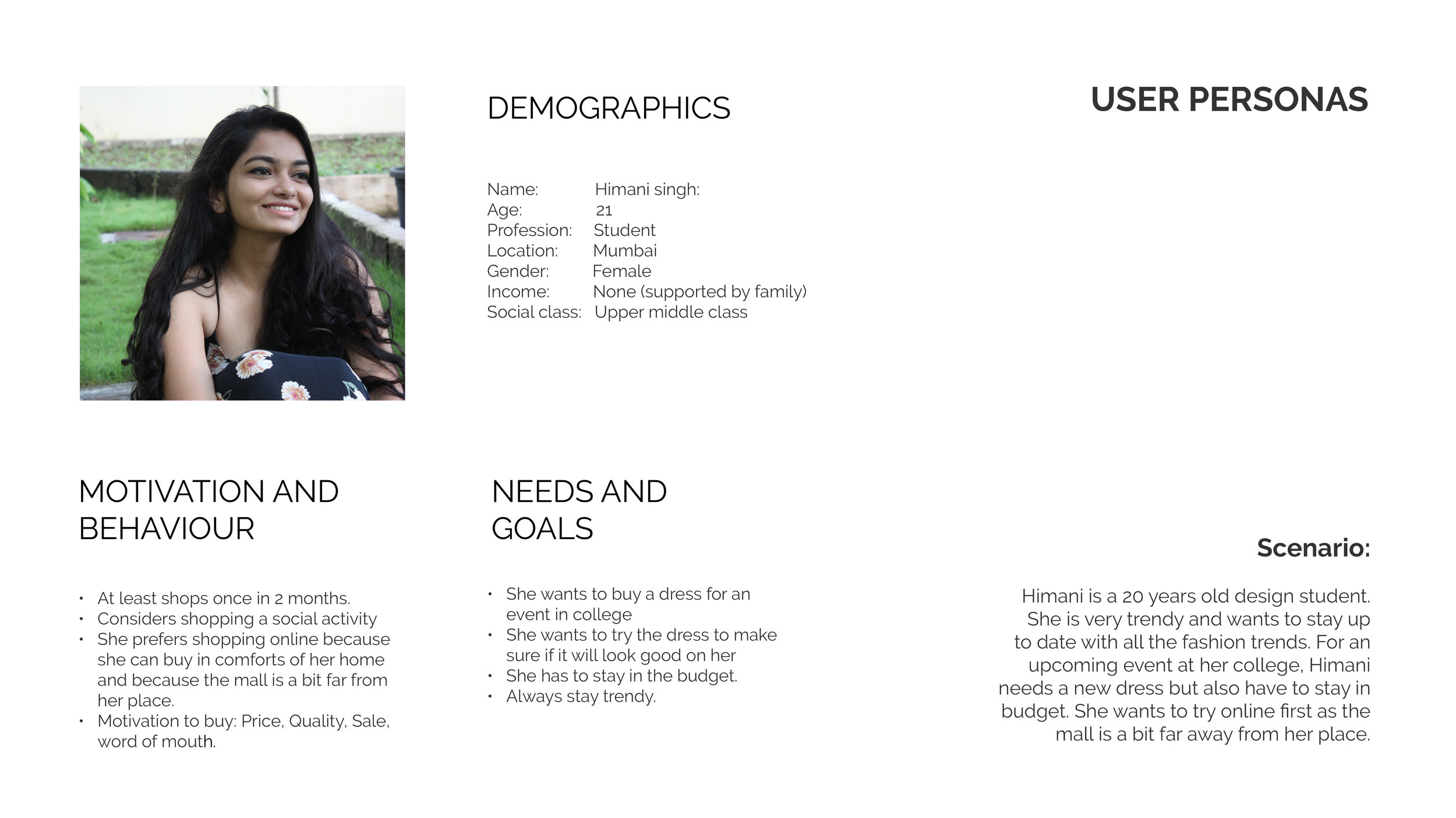
When I shop online for clothes, I want to be able to quickly update my wardrobe so that I can look fashionable all the time.
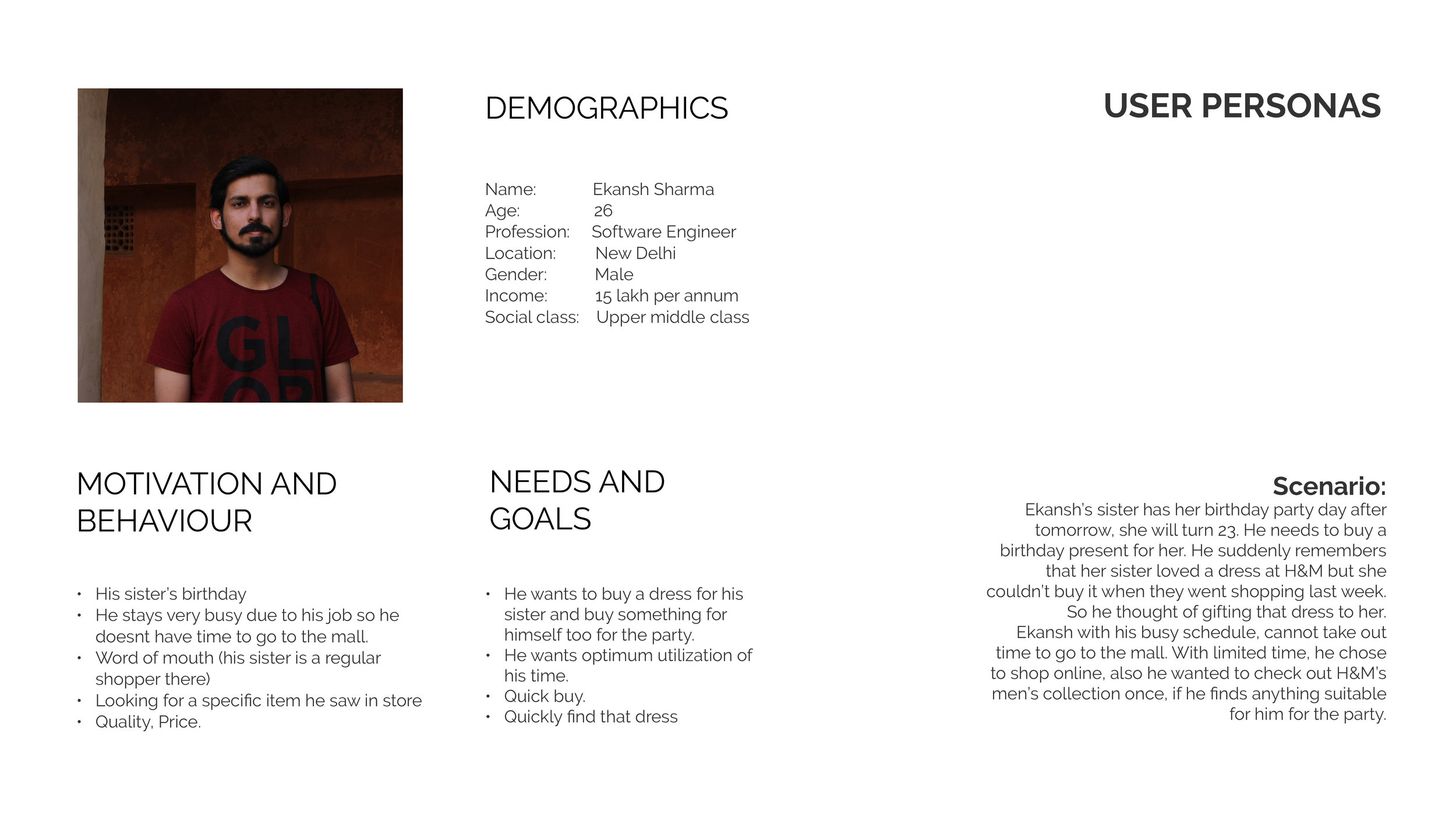
When I am searching a particular item online that I saw in store I want to find it easily and want it to be available in sizes and colors that I want in the store so that I have access to all merchandise.
Whenever I am not able to visit the store conveniently, I want access to H&M merchandise online so that I can buy them without going to the mall.
For the better understanding of the product, I tested the website with 10 frequent online shoppers. The age of the users ranged between 19-45 yrs old, including both male and female. Each user was asked to imagine he or she was in a scenario and to perform a series of tasks such as:
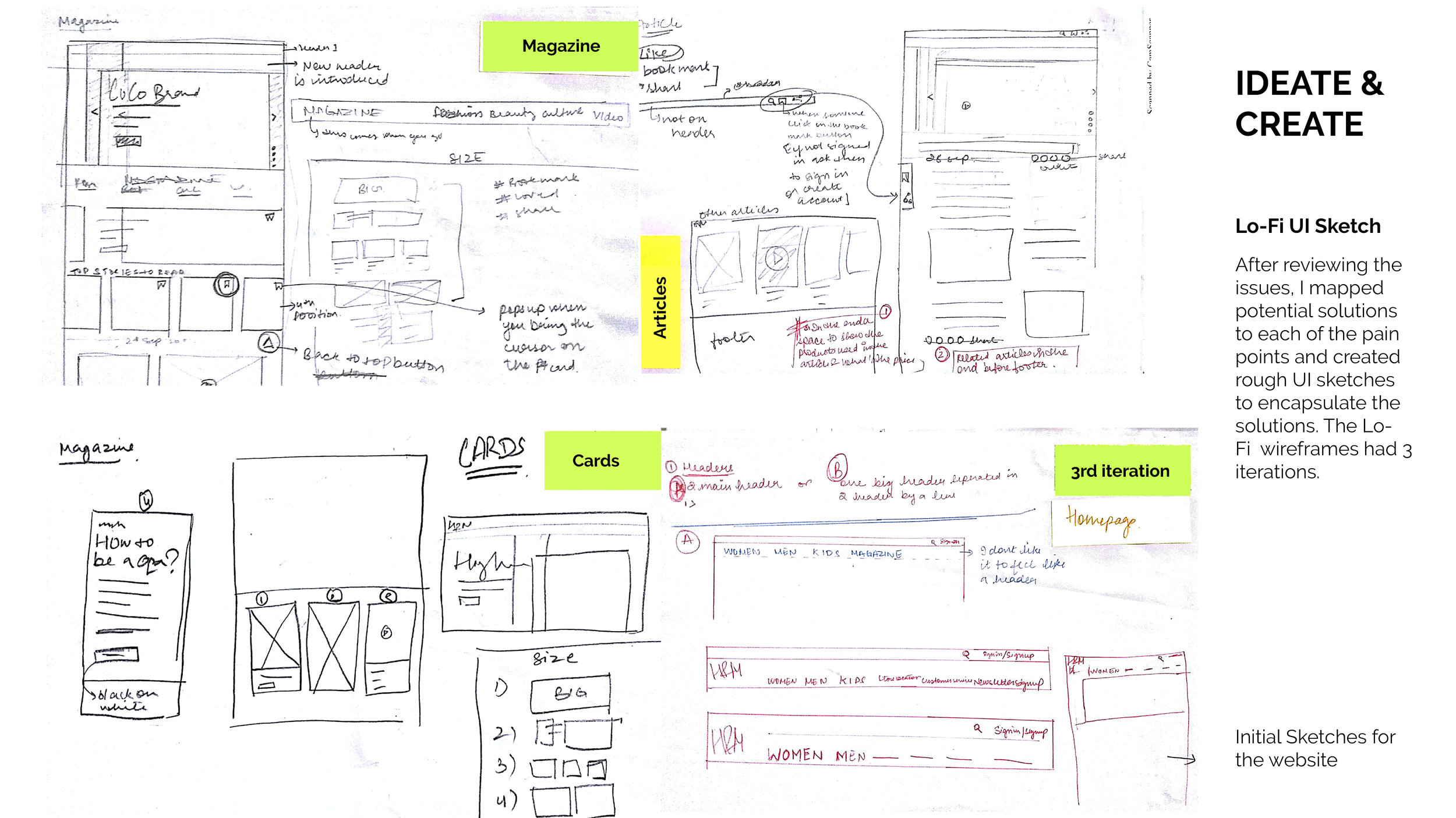
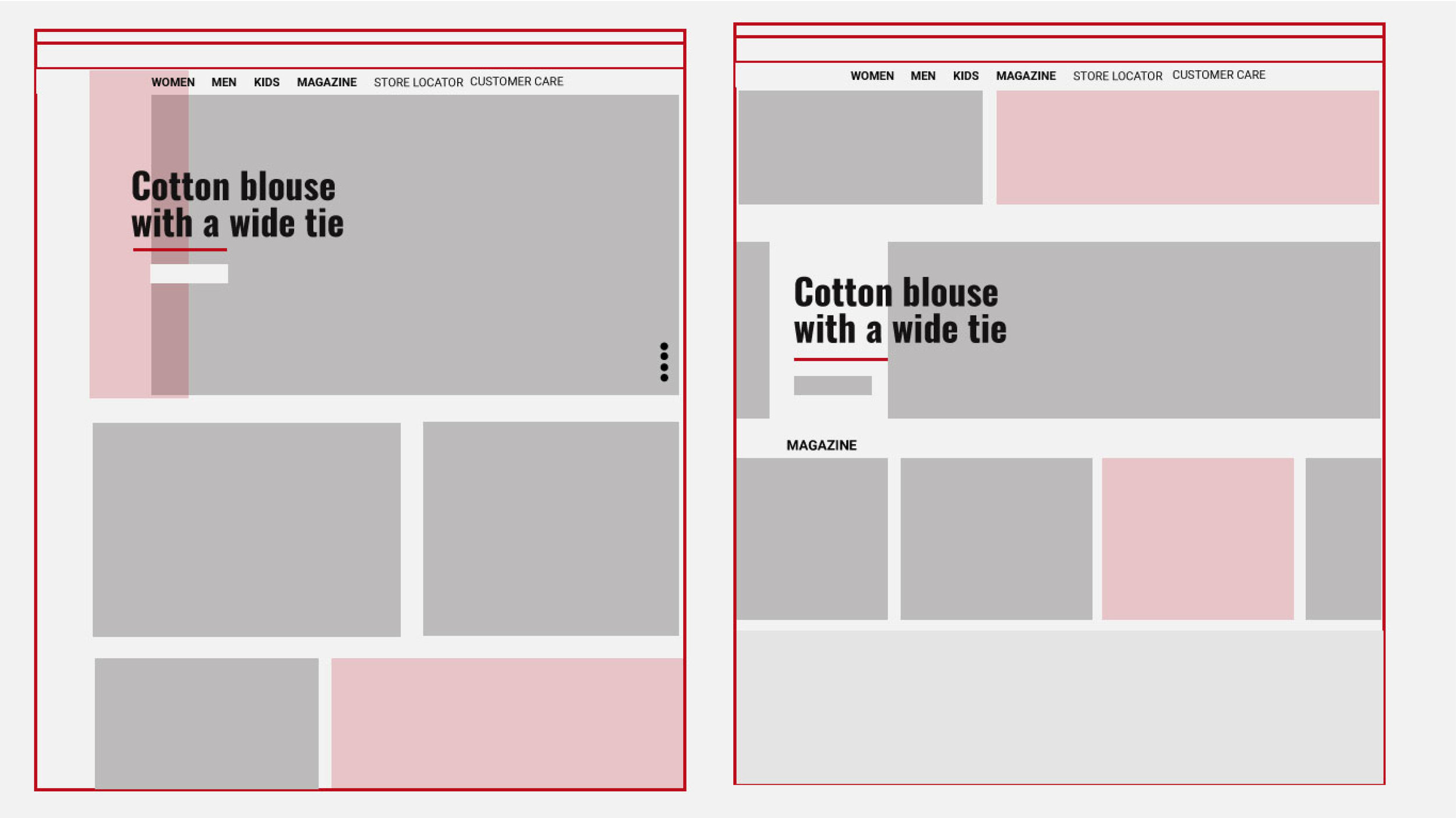
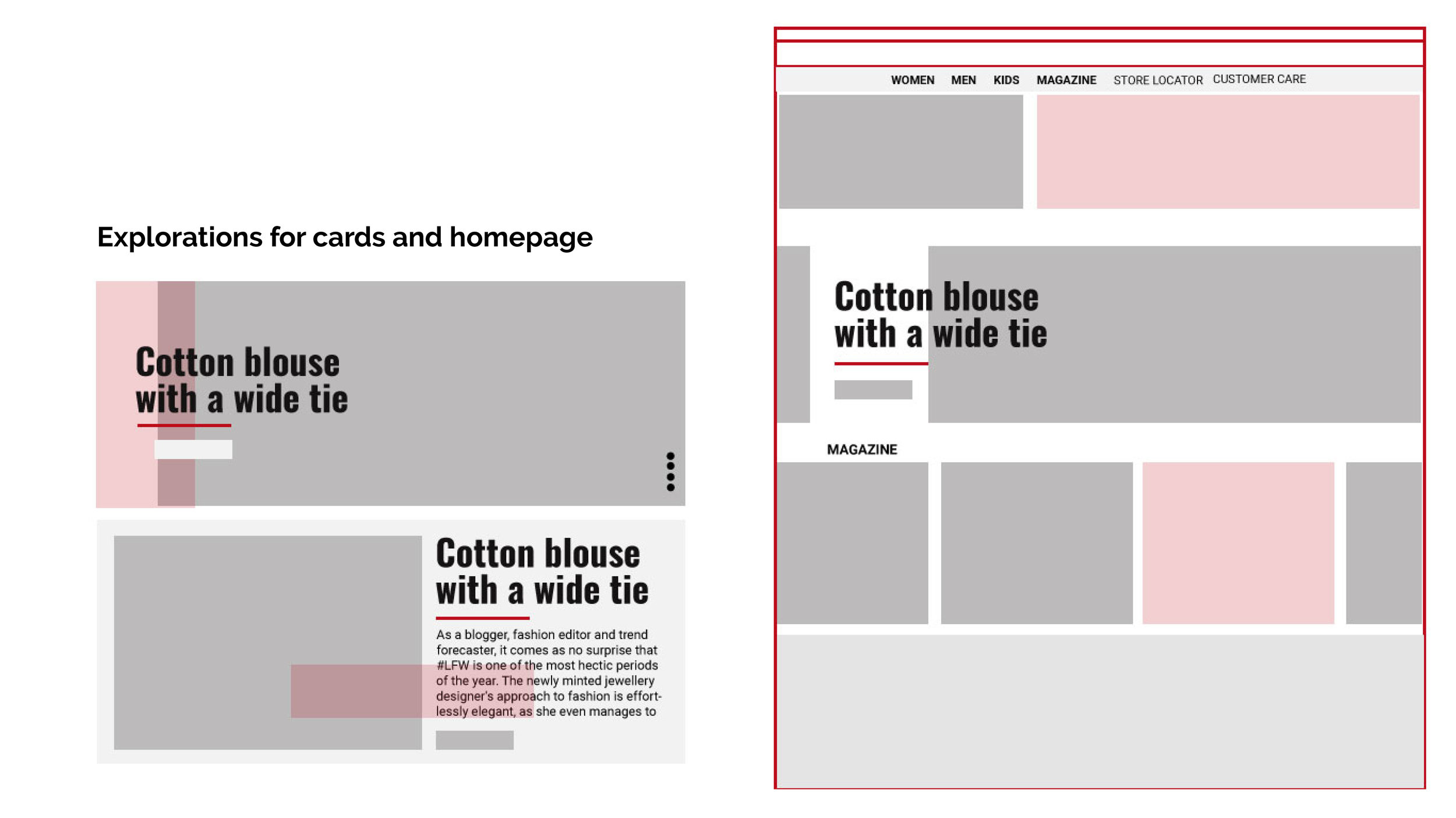
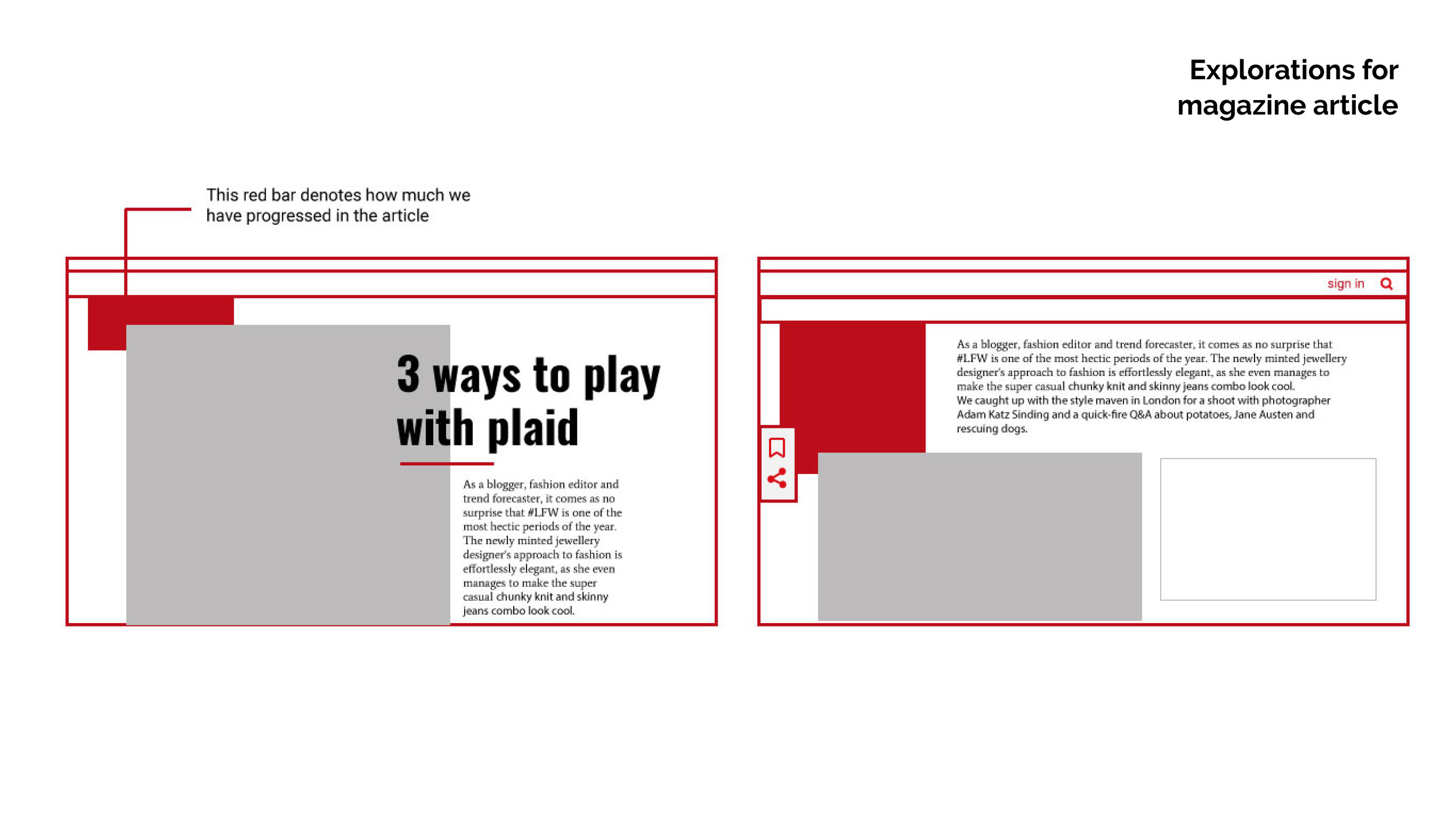
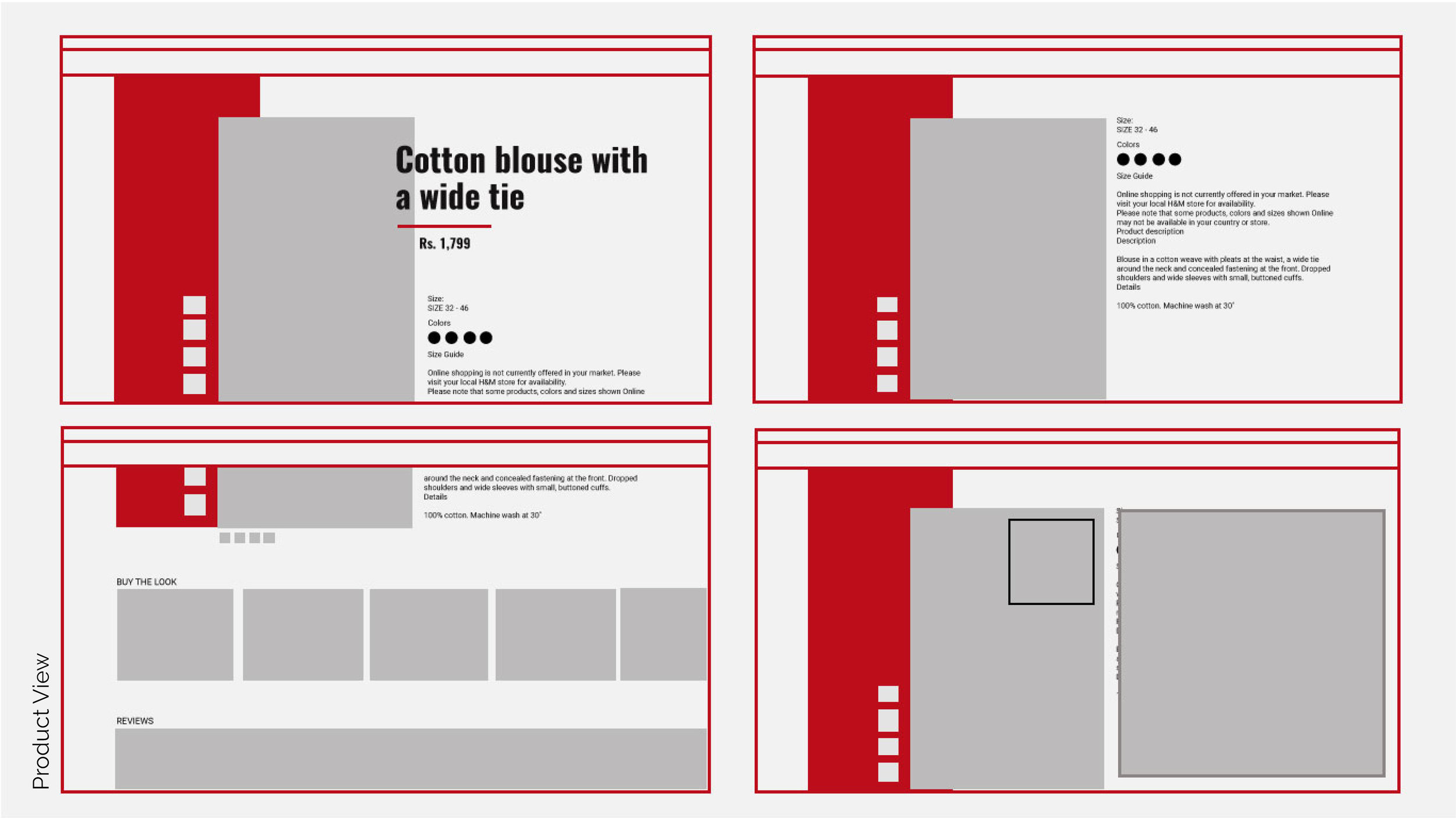

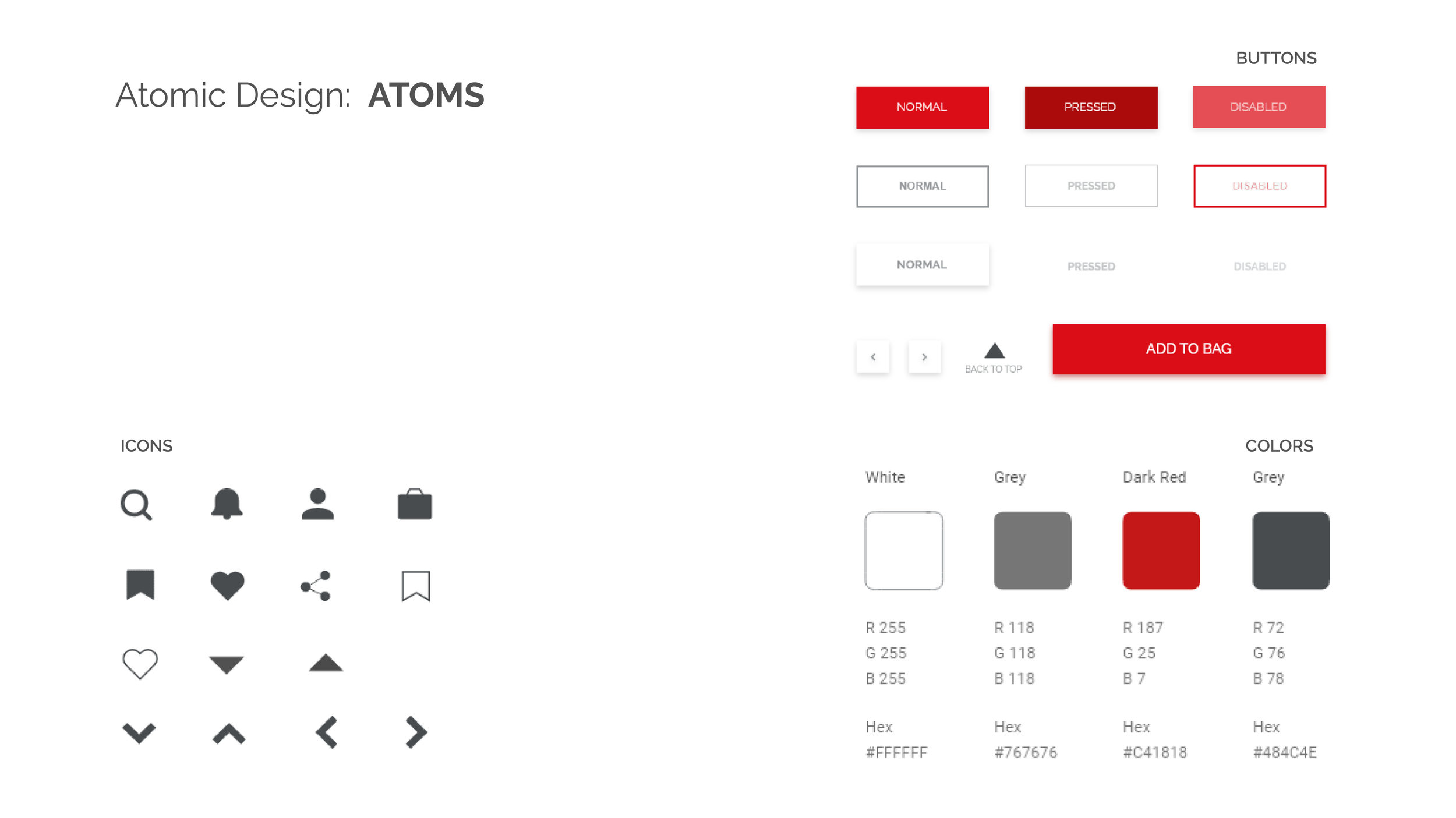
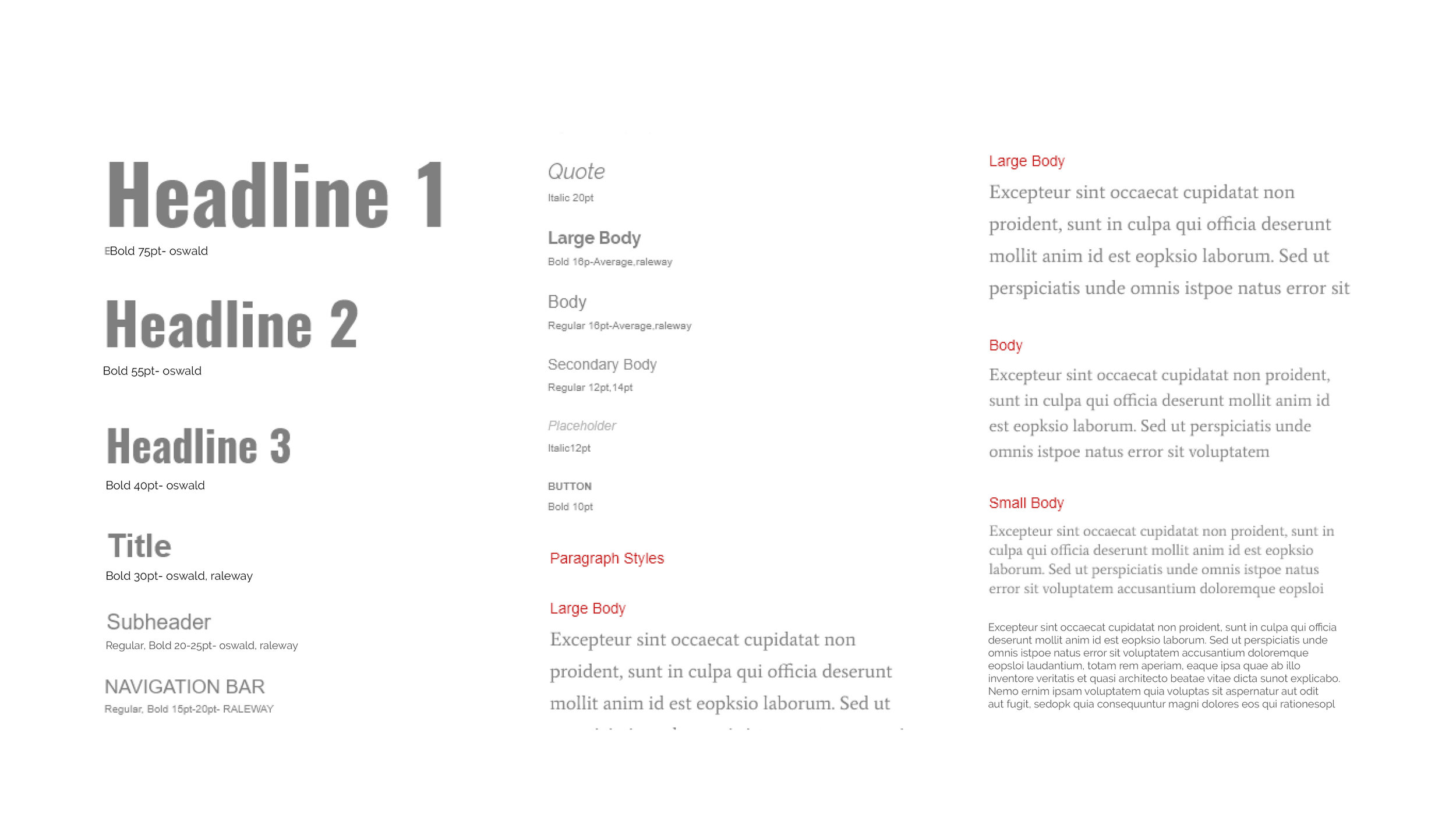
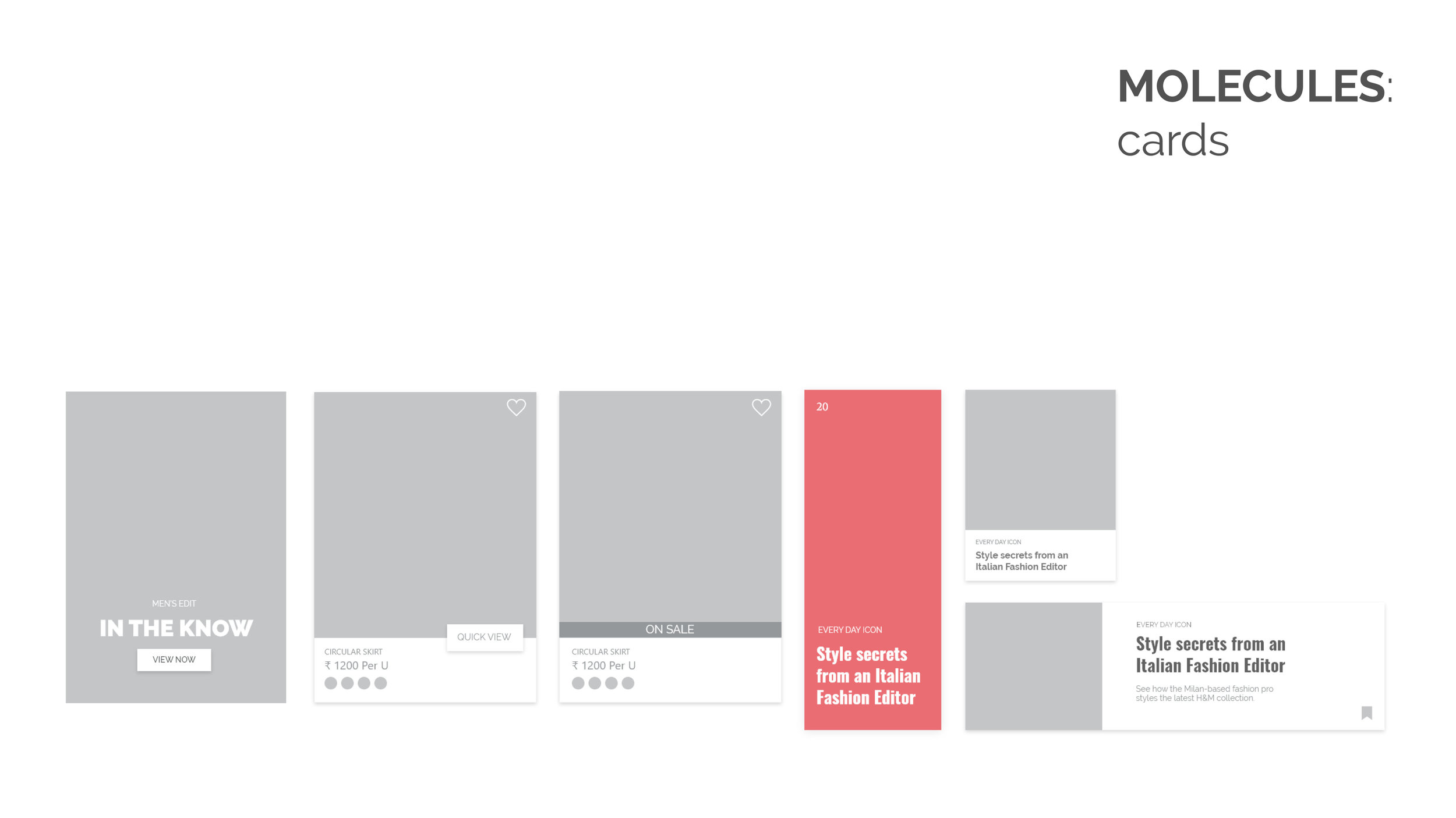
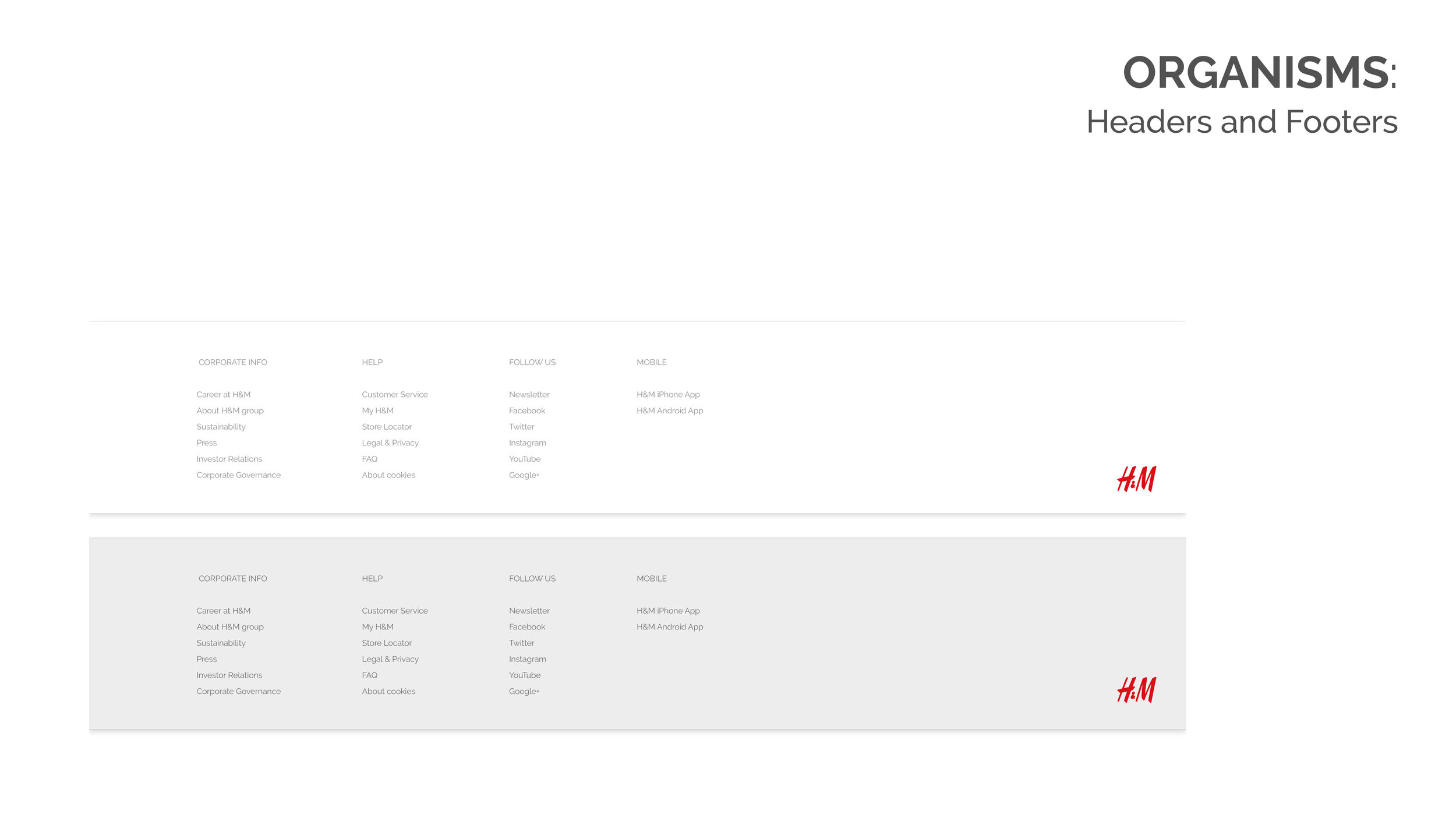
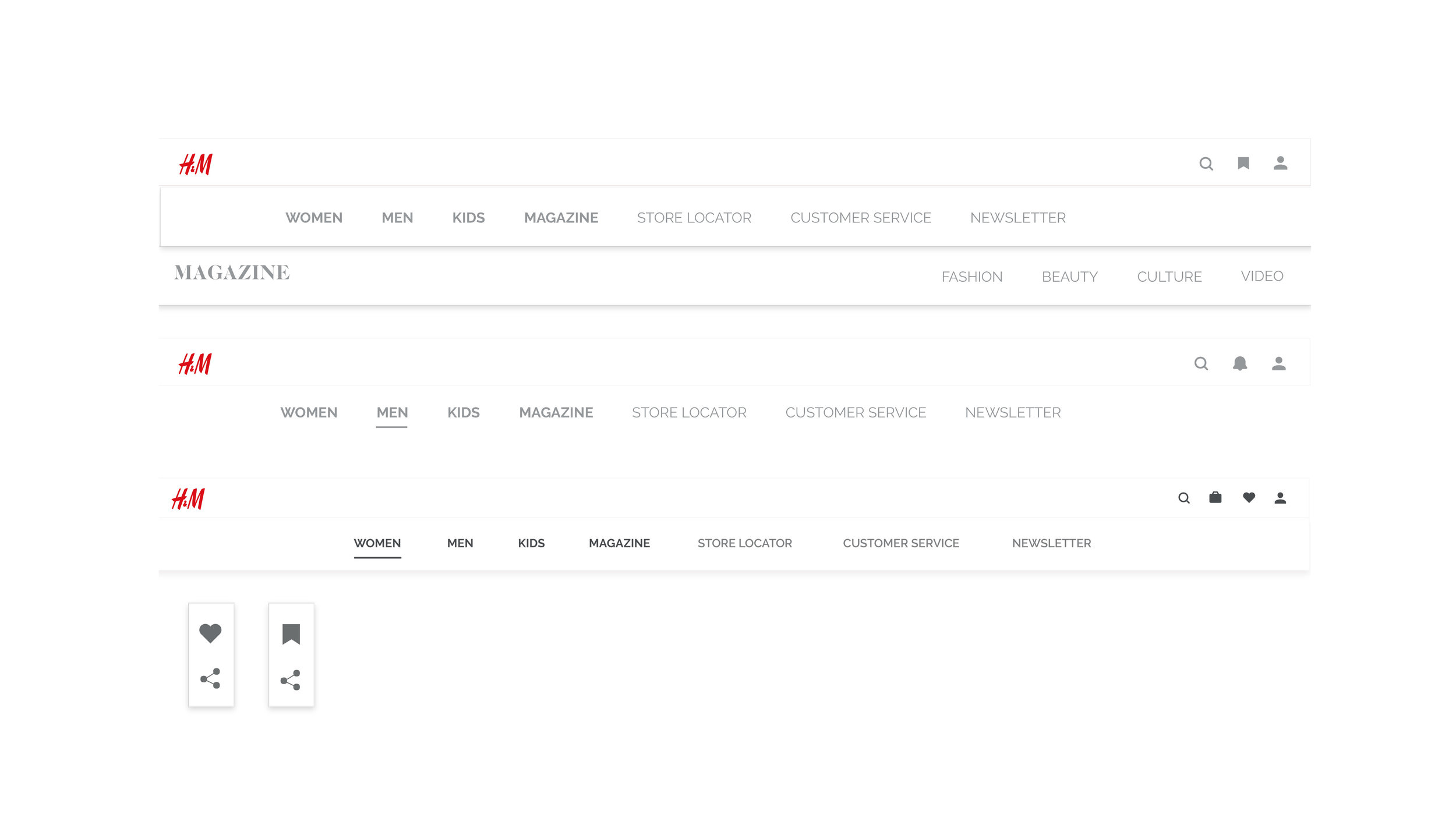
A unified design system is essential for building better and faster. At this phase of the iteration, I introduced a methodology called ‘ATOMIC DESIGN’ by Brad Frost in my project
For building a new visual language for H&M, Atomic Design played a major role, in building the interface from the smallest building block (Atoms) and then further using those basic elements to build up to the next level.
The visual language should be unified and universal. Each piece is part of a greater whole and should contribute positively to the system at scale. H&M is multinational clothing retail company, its products and visual language should be welcoming and accessible to a wide global community.
I have to admit, it was quite a challenge and the concept of atomic design was quite new to me, so I perceived it in a way I could at that point in time.